
Cannabis labels can be confusing, especially when you see THC percentages listed beside different products. Many legal-age consumers in Canada wonder whether a higher THC number automatically means a “better” strain. The answer is no. THC level is only one part of the cannabis experience.
Understanding the difference between a low THC vs high THC strain can help adults make more informed, responsible choices and avoid an experience that feels stronger than expected.
What Is THC?
THC, short for tetrahydrocannabinol, is the main intoxicating compound in cannabis. It is largely responsible for the “high” associated with cannabis. On regulated cannabis packaging, THC may appear as a percentage for dried flower or as milligrams for products like edibles, oils, or capsules.
In simple terms, the THC percentage means how much THC is in that product by weight. A higher THC percentage(up to the legal limit) usually means stronger intoxicating effects, but individual response can vary depending on tolerance, method of use, product type, and personal sensitivity.
What Is a Low THC Cannabis Strain?
A low THC cannabis strain usually contains a lower concentration of THC and may feel milder for many adults.
Low THC strains typically fall in the 10–17% range for dried flower. Some products — especially those marketed toward beginners or microdosers — sit even lower, around 5–10%.
These products are often chosen by people in cannabis stores across Edmonton who want a gentler experience or who are new to cannabis.
Potential low THC cannabis benefits may include a more manageable experience, less intensity, and a lower chance of feeling overwhelmed. Some low THC products also contain CBD, a non-intoxicating cannabinoid that may change the overall feel of the product.
What Is a High THC Strain?
A high THC strain contains a stronger concentration of THC. These products may produce more noticeable effects, including stronger euphoria, altered perception, relaxation, or increased intensity.
High THC strains generally clock in above 20%, with some products in the legal market pushing 30%+(as per the Canadian cannabis market trends).
However, high THC weed effects can also include unwanted reactions for some people, such as anxiety, dizziness, confusion, dry mouth, or feeling too impaired. For newer or occasional consumers, high THC products may feel much stronger than expected.
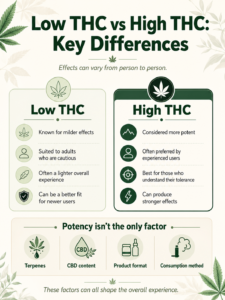
Low THC vs High THC: Key Differences
The differences are purely related to effects, although they can vary from user to user.
While strains with Low THC are known for milder effects. These strains suit adults who are cautious and looking for a lighter experience, especially new users.
On the side, High THC strains are considered more potent. Those prefer or suggest for experienced users who understand its potential effects and their own tolerance.
That said, potency in the strongest weed strain is not the only factor for a better experience. Terpenes, CBD content, product format, and consumption method can all shape the experience.
Rules for Cannabis Users In Canada
For safety, legal-age adults must check the label for the THC and CBD ratio and shop for weed with their experience level.
In Canada’s regulated market, it is mandatory to have a label on each product to help users understand the potency and make a safe choice.
It is also important to avoid driving, operating machinery, or mixing cannabis with alcohol or other substances. Adults who are new to cannabis should follow the public-health guidance of starting low and going slow.
For related education, readers may also explore different weed types, but potency should always be understood with safety and personal tolerance in mind.
Conclusion
The main difference between low THC and high THC strains is potency. Low THC products tend to offer milder effects, while high THC products can feel much stronger and may increase the chance of uncomfortable side effects. For legal-age Canadian consumers, the best choice depends on experience level, comfort, product format, and desired outcome — not just the highest number on the label.